Homemade Pasta Recipe
If you have ever dreamed of creating restaurant-quality pasta right in your own kitchen, then this recipe for Homemade Pasta is going to feel like a dream come true. From the simple handful of ingredients to the tactile joy of kneading and rolling the dough, making pasta from scratch unlocks a whole new world of taste and texture that you just cannot replicate with store-bought noodles. It’s fresh, tender, and carries the warmth of something lovingly crafted by your own hands. Whether you want to impress your family or just indulge in a rewarding cooking adventure, mastering Homemade Pasta will elevate your meal times like never before.
Ingredients You’ll Need
Only a few ingredients come together to make Homemade Pasta, and each one plays a critical role. The flour forms the base, eggs add richness and help bind everything together, salt brings out flavor, and olive oil lends a subtle silkiness to the dough.
- 2 cups all-purpose flour: Spooned and leveled for precise measurement to ensure the dough isn’t too dry or sticky.
- 3 large eggs: Provide both moisture and structure, creating that tender, chewy texture we all love.
- ½ teaspoon sea salt: Enhances the pasta’s natural flavors without overpowering.
- ½ tablespoon extra-virgin olive oil: Adds a touch of smoothness and helps the dough stay pliable.
How to Make Homemade Pasta
Step 1: Prepare the Dough Nest
Start by scooping your flour onto a clean work surface and creating a nest with a well in the middle. Into this well, crack the eggs, add olive oil, and sprinkle the salt. Using a fork, gently break the eggs, trying your best to keep the flour walls standing tall. This keeps your ingredients contained as you slowly bring the flour inwards, gradually incorporating them to form a shaggy dough ball.
Step 2: Knead Until Smooth
Here’s where the magic happens. Knead the dough for 8 to 10 minutes. Initially, it’ll feel dry and crumbly, but stick with it! With each moment of kneading, the dough will pull together and become silky smooth. Feeling stubborn dryness? Dampen your fingers and continue kneading. Too sticky? Sprinkle flour on your surface. Once perfect, shape it into a ball, wrap it in plastic, and let it rest at room temperature for half an hour.
Step 3: Prepare Baking Sheets
While the dough is resting, dust two large baking sheets generously with flour. These will serve as the landing pads for your delicate pasta sheets, preventing any unwanted sticking.
Step 4: Divide and Flatten
Cut your dough into four equal pieces. Take one piece and gently flatten into an oval disk shape. If you have a pasta roller attachment or machine, pass the dough three times on the widest setting (level 1), ensuring it stays pliable and never dry.
Step 5: Fold the Dough
Place the flattened sheet on your work surface, then fold the short ends towards the center so they meet. Fold again in half widthwise to create a rectangle. This folding process helps develop the gluten and creates layers for a better textured pasta.
Step 6: Thin the Dough with the Roller
Feed the folded dough through the pasta roller three times at level 2, then three times at level 3, and finally once each at levels 4, 5, and 6. You’re aiming for thin, light sheets that feel almost translucent but are still sturdy enough to hold sauce.
Step 7: Flour and Fold Sheets
Place half a pasta sheet onto one of your floured baking sheets. Sprinkle flour generously, then fold the other half over it. Flour the top side well, ensuring every layer is dusted to prevent sticking later on.
Step 8: Repeat for Remaining Dough
Do the same rolling, folding, and flouring sequence for all the other dough pieces. This step ensures you have plenty of fresh pasta ready to cook or store.
Step 9: Cut Pasta Into Noodles
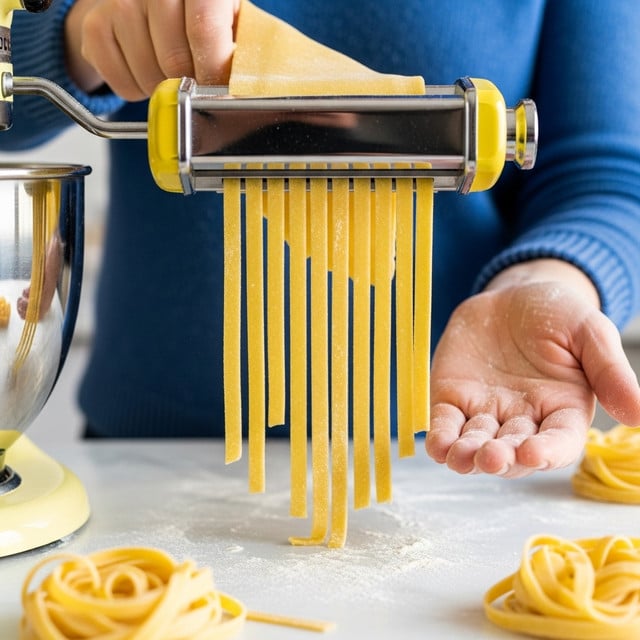
Attach your pasta cutter—fettuccine works beautifully here—and run the sheets through it. Toss the cut noodles lightly in flour and spread them across the baking sheet to keep them from clumping together. Your Homemade Pasta is now ready for cooking!
How to Serve Homemade Pasta
Garnishes
Fresh pasta pairs amazingly well with simple garnishes like freshly grated Parmesan or Pecorino cheese, a sprinkle of chopped fresh basil or parsley, and a drizzle of high-quality extra-virgin olive oil. These touches highlight the fresh pasta’s flavor rather than overwhelming it.
Side Dishes
Complement your meal with a bright salad featuring peppery arugula or a classic Caprese to keep things light and satisfying. Garlic bread or a rustic loaf also makes a lovely companion to soak up any extra sauce from your pasta.
Creative Ways to Present
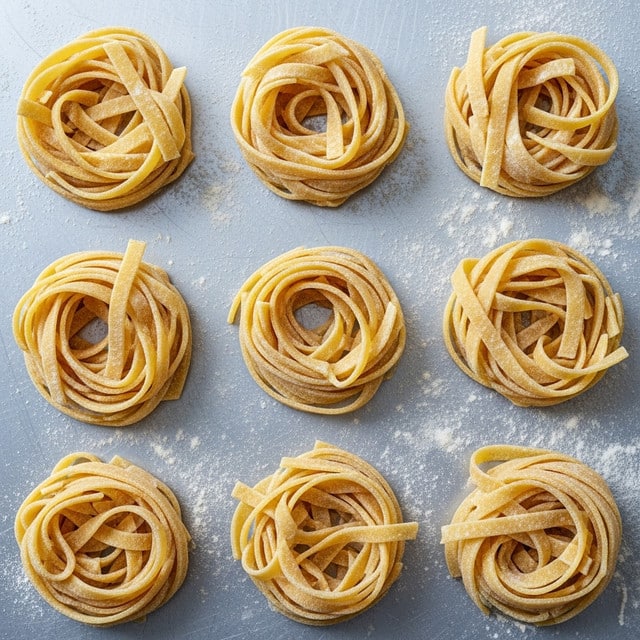
Serve your Homemade Pasta tossed with slow-roasted cherry tomatoes and lemon zest for a colorful plate, or embrace indulgence with a hearty ragù or creamy Alfredo sauce. For a fun twist, shape portions into nests and top with a perfectly cooked egg and a scatter of chili flakes for breakfast or brunch flair.
Make Ahead and Storage
Storing Leftovers
Fresh Homemade Pasta is best enjoyed the same day, but if you do have leftovers, store them in an airtight container in the fridge for up to 2 days. Toss with a little flour or oil to keep noodles separate before storing.
Freezing
You can freeze Homemade Pasta for longer storage. After cutting, spread the pasta on a baking sheet and freeze for about an hour, then transfer to freezer bags. Frozen pasta keeps well for up to 2 months and can be cooked straight from frozen.
Reheating
Reheat cooked pasta gently by tossing in a warm pan with a splash of sauce or olive oil. Avoid microwave reheating to preserve the fresh texture and flavor.
FAQs
Do I need a pasta machine to make Homemade Pasta?
While a pasta roller attachment or machine makes thinning and cutting easier, you can absolutely make Homemade Pasta by hand using a rolling pin and a sharp knife. It requires a bit more effort but the result is just as rewarding.
What flour is best for making pasta dough?
All-purpose flour works beautifully for Homemade Pasta, offering a good balance of protein for structure and softness. Some enthusiasts prefer ’00’ flour for an even finer texture, but all-purpose is very accessible and reliable.
Can I make Homemade Pasta without eggs?
Eggs add richness and elasticity, but you can make eggless pasta by using just flour and water, especially if you prefer vegan options. The technique and texture vary slightly but it’s a great alternative.
How long should I knead the pasta dough?
Kneading for about 8 to 10 minutes is important for developing gluten, which gives the dough its elasticity and strength. Knead until the dough is smooth and slightly tacky but not sticky.
How do I prevent my Homemade Pasta from sticking together?
Dust the dough sheets and cut noodles generously with flour at every stage and spread them out on floured baking sheets to dry slightly before cooking. Using plenty of boiling salted water and stirring occasionally during cooking helps keep pasta strands separate too.
Final Thoughts
Making Homemade Pasta is one of the most satisfying cooking experiences you can have. It combines simple ingredients with hands-on preparation that rewards you with fresh, tender noodles bursting with flavor and texture. Whether you are treating yourself on a weekend or crafting a special meal for loved ones, this recipe invites you to slow down and celebrate the joy of cooking from scratch. Give it a try—you’ll wonder why you ever settled for anything less than the best!
PrintHomemade Pasta Recipe
This homemade pasta recipe guides you through the simple yet rewarding process of making fresh pasta from scratch using basic ingredients. With just flour, eggs, olive oil, and salt, you can create smooth, tender pasta dough that’s perfect for any sauce or dish. The detailed kneading, rolling, and cutting instructions help you achieve the perfect texture at home.
- Prep Time: 15 minutes
- Cook Time: 5 minutes
- Total Time: 50 minutes
- Yield: 4 servings 1x
- Category: Main Course, Pasta
- Method: Kneading, Rolling, Cutting, Boiling
- Cuisine: Italian
- Diet: Vegetarian
Ingredients
Main Ingredients
- 2 cups all-purpose flour (spooned & leveled)
- 3 large eggs
- ½ teaspoon sea salt
- ½ tablespoon extra-virgin olive oil
Instructions
- Prepare the Dough Nest: Place the flour on a clean work surface and shape it into a nest shape, creating a well in the center. Add the eggs, olive oil, and sea salt into the well. Use a fork to gently break up the eggs while keeping the flour walls intact as much as possible, then gradually incorporate the flour into the eggs by hand until a shaggy dough forms.
- Knead the Dough: Knead the dough by hand for 8 to 10 minutes. Initially, it will feel dry, but continue until it becomes smooth and cohesive. Adjust moisture by adding tiny sprinkles of water if too dry or dusting with flour if too sticky. Once kneaded, shape the dough into a ball, wrap it in plastic wrap, and let it rest at room temperature for 30 minutes.
- Prepare Baking Sheets: Dust two large baking sheets generously with flour and set aside to prevent pasta from sticking during the rolling and drying process.
- Divide and Flatten Dough: Slice the rested dough into four equal pieces. Take one piece and gently flatten it into an oval disk shape to prepare for rolling.
- Initial Rolling: Pass the dough disk through a pasta roller attachment or pasta maker three times at level 1, which is the widest setting. This begins to flatten and stretch the dough evenly.
- Fold and Roll: Place the rolled dough on the work surface, fold both short ends to meet in the center, then fold the dough in half, forming a rectangular shape. Then roll the dough three times each on level 2 and level 3, followed by one pass each on levels 4, 5, and 6 for a thin, even sheet.
- Flour and Fold: Lay half of the rolled pasta sheet onto one of the floured baking sheets and sprinkle with flour. Fold the other half over the floured side and sprinkle flour on top as well. Ensure every surface is floured to prevent sticking.
- Repeat for Remaining Dough: Repeat steps 4 through 7 with each piece of dough until all sheets are rolled, floured, and folded on the baking sheets.
- Cut the Pasta: Run each folded pasta sheet through the pasta cutter attachment (such as a fettuccine cutter) to create your desired pasta shape.
- Cook the Pasta: Cook the fresh pasta immediately in a large pot of salted boiling water. Fresh pasta cooks quickly, usually within 2 to 4 minutes depending on thickness, until tender but firm to the bite.
Notes
- Use fresh, high-quality eggs and flour for best results.
- Resting the dough allows gluten to relax, making it easier to roll out.
- Maintain a well-floured surface to prevent sticking during rolling and cutting.
- If you do not have a pasta roller, a rolling pin can be used, but thinner sheets may be harder to achieve.
- Fresh pasta cooks much faster than dried pasta, watch closely to avoid overcooking.
- Store any unused fresh pasta by laying it flat on a floured sheet and covering with a clean cloth or refrigerate wrapped tightly for up to 2 days.
Nutrition
- Serving Size: 1 serving (approx. 1 cup cooked pasta)
- Calories: 220 kcal
- Sugar: 0.5 g
- Sodium: 200 mg
- Fat: 5 g
- Saturated Fat: 1 g
- Unsaturated Fat: 4 g
- Trans Fat: 0 g
- Carbohydrates: 35 g
- Fiber: 1.5 g
- Protein: 7 g
- Cholesterol: 110 mg
Keywords: homemade pasta, fresh pasta, pasta dough, Italian recipe, pasta roller, fettuccine, easy pasta