How to Make a Sourdough Starter Recipe
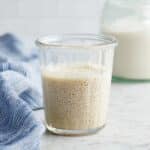
Learn how to create a lively and bubbly sourdough starter from scratch using just flour and filtered water. This step-by-step guide takes you through the feeding process across 7 days, ensuring your starter is active and ready for baking delicious sourdough bread and other fermented recipes.
- Prep Time: 5 minutes initial mixing + 7 days of continuous feeding
- Cook Time: N/A
- Total Time: 7 days (including resting and feeding periods)
- Yield: Approximately 2 cups of active sourdough starter 1x
- Category: Starter Preparation
- Method: No-Cook
- Cuisine: Universal
- Diet: Vegan
Ingredients
Scale
Starter Ingredients
- 1 cup unbleached all-purpose flour (King Arthur recommended)
- 1 cup filtered water
Instructions
- Day 1: Initial Mix Combine 1 cup of unbleached all-purpose flour and 1 cup of filtered water in a clean glass bowl. Stir thoroughly, scraping the sides to fully mix the ingredients. Cover the bowl with a tea towel and let it sit at room temperature for 24 hours to start the fermentation process.
- Days 2–5: Daily Feeding Each day, discard half of the starter mixture. Then feed the remaining starter with 1 cup of flour and 1 cup of filtered water. Stir well to combine, cover again with the tea towel, and let it rest at room temperature for another 24 hours. Repeat this process daily to encourage yeast growth.
- Days 6–7: Twice Daily Feeding Increase feeding frequency to every 12 hours instead of once a day. Continue discarding half the starter and feeding it with 1 cup of flour and 1 cup of water each time. Stir well and cover. This accelerates the fermentation and builds a strong starter.
- By Day 7: Check Readiness By the seventh day, the starter should exhibit bubbles throughout, be active, and roughly double in size a few hours after feeding. Perform the float test by dropping a small dollop into room-temperature water; if it floats, your starter is ready for baking.
Notes
- If your starter is not bubbly or doubling by day 7, it is normal for some starters to take up to 14 days to develop completely depending on environmental factors.
- Maintain consistent feedings every 12 hours with discarding half and adding 1 cup of flour and water each time.
- Keep your starter in a warm spot around 75–80°F to encourage yeast activity, such as near a stove or on top of the refrigerator.
- Use the float test as an indicator of readiness: if the starter floats in water, it’s active; otherwise, continue feeding.
- If fermentation seems slow, try mixing in whole wheat or rye flour, which contain more natural yeast and nutrients to boost activity.
- Once active, mark the starter’s level after feeding to watch for doubling in size—a key sign of strength.
- For longer storage, keep the starter in an airtight container in the refrigerator and clean the container occasionally to prevent crust buildup.
Keywords: sourdough starter, homemade starter, fermentation, baking starter, sourdough bread preparation, natural yeast